The trouble with Australian seasons

The following excerpt is taken from my Master’s thesis on seasonal celebrations:

In Australia seasonal variability has been the norm for many thousands of years. From a European point of view it is “a continent characterised by extremes of variation and unpredictability.” (Rose, 2005: 38) The cultural practices of Indigenous Australians, however, have evolved alongside Australia’s changeable weather so that “conditions labelled by whitefellas as ‘very changeable’ [are] in fact ‘entirely natural’” (Rose, 2005: 37). Debbie Bird Rose describes an Indigenous system of understanding and interpreting the seasons according to a range of interrelated events.

Rather than being based on a projection of an annual cycle, seasonal changes are forecast through awareness of changes in flora and fauna and responded to as they occur. “The system is widespread, the content is local. All of it – system and content – is built from extremely longterm observations that have accommodated variability and patchiness and identified precise concurrences.” (2005: 40) Such a system, Rose argues, is impossible to correlate with the European calendar without losing the dynamism that makes it so suited to Australian seasonal conditions. It holds the seeds of a world-view that challenges the European seasonal mind-set and represents a way forward for spiritual ecologists. Rose holds the Indigenous system up as an example to us all of how we can live “in this vulnerable continent.” We can seek to build a relationship with what is happening in the natural world around us by allowing observation to be the basis of ritual.

So as I alluded in my response to some questions on my previous post the notion of ‘indigenous seasons’ is problematic. The familiar 4 season calendar introduced from the north was shaped by an agrarian relationship to the land. There’s a sense in which the whole concept of seasons don’t apply to Australia because of nonannual cycles like El Nino/ La Nina. However the idea of basing rituals on observation presents a great opportunity, particularly as climate change begins to show its teeth.

How this might work in practice I don’t know, I’d love to explore. I imagine a semi-structured ritual that provides space for call and response, litanies of experiences or free flowing physical expression, there’s no limit to the ways you could gather observations. A system of continuously adapting and responding to changes in seasonal patterns is really the only way to maintain a genuine relationship with the land. It also has to be more than human somehow though, we have to allow space for the Earth to speak to us, to feel our small selves within that larger self.

Earth, spirit, community

Five years ago I completed a Master’s thesis called Seasonal Celebrations in the Melbourne Bioregion. It was an exploration of various groups who were attempting to create or adapt seasonal celebrations that are attentive to our local experience of the seasons.

This is particularly pertinent in Australia. As a former British colony a large portion of society here practice cultural traditions that were developed in harmony with a completely different landscape. In case that’s not enough we are in the southern hemisphere so our seasons are opposite to those of the dominant global cultures of US and Europe. The epitome of this is the hot sweaty santa claus in the red fur lined suit on a scorching 35 degree (celcius) day, sitting on a throne surrounded by fake snow and fir trees.

Santa claus at the beach

It makes no kind of sense and yet, what I found when I was discussing my thesis with people was that the pagan elements, the ones that typify an ancient relationship with the Earth (the fir tree, the roast lunch, the stockings by the chimney), are the ones that are closest to people’s hearts. One year, for our extended family Christmas, I subsituted a wattle branch from an overburdened tree that was about to fall over, for the traditional fir tree. All the kids asked where the Christmas tree was and insisted that the wattle was the wrong colour.

I wrote my thesis hoping to discover a spiritual practice that would honour my connection to this country. Not in a patriotic sense, but with a deeply grounded respect for the land that has brought me up, that has been a source of spiritual solace. I found great people doing great work but I did not find my spiritual home.

Return of the Sacred Kingfisher festival at CERES

I love my sense of belonging to Earth. I love feeling awed and humbled and held by something greater than myself. I love feeling that I am part of the richness of the whole Earth community. Thus far my spiritual journey with the Earth has been a solitary pursuit. Some would say that this is a necessity, that it’s not possible to share such a thing in community. I don’t know if that’s true or not but my heart longs to try.

I can’t help but feel that a spiritual community, like the Buddhist jewel of sangha, would help to keep that sense of connection alive and central to my life. Particularly when family, work and home responsibilities prevent me from immersing myself in wilderness.

Wominjeka

Six years ago I did the Aboriginal Heritage Walk through the Melbourne Botanic Gardens. The moment of participating in the welcome ceremony and receiving a gumleaf – symbol of permission to pass through Wurudjeri country – was profoundly moving. I wasn’t aware of the guilt I carried around until that humbling moment. The following extract is taken from my journal at the time:

My head is still spinning. The information is one thing – all the uses of plants, the stories, the words for things, the tools, the place of animals and the interaction between people of different language groups. How do you make sense of such a complex culture in only two hours? … Their whole way of life is different to mine. Their stories overlay the city, I look around and imagine people … interacting here, imagine a whole other landscape with waterfalls and different names.

There’s a song by Tiddas that captures it perfectly “A living history beneath the concrete of the city streets which we walk upon.” When it comes to ecological identity I have so much to learn from Aboriginal Australians. I feel so hesitant though, I desperately want their knowledge but I am so ashamed of the way my people have decimated their culture (and continue to do so). I feel unworthy of the teaching. Then again restoring my own relationship to country and learning to care for it may provide a path to reconciliation.

A friend once told me that he volunteered to support urban Aboriginal people living in poverty.  When I shared my feeling that my relationship to the land was dependent on reconciliation he told me he didn’t think reconciliation would lead us back to the Earth. Instead turning to the Earth and caring for country is the only way nonindigenous Australians could come close to understanding our first peoples.

David Suzuki has a go at talking sense downunder

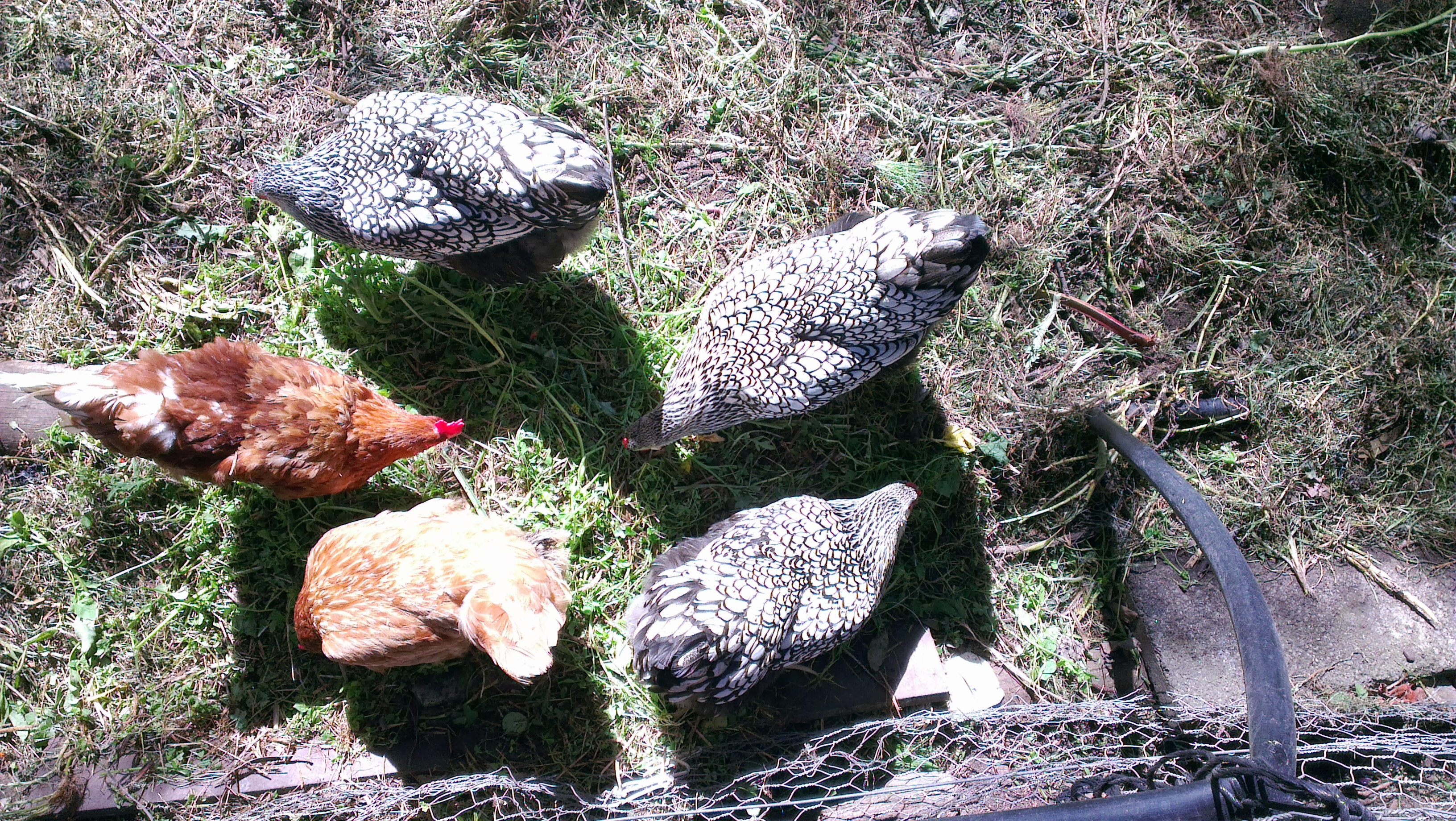
Gratuitous chicken picture

And then we’re spiritual animals. We emerged out of nature and when we die we return to nature. We need to know there are forces impinging on us that we will never understand or control. We need to have sacred places where we go with respect, not just looking for resources or opportunity.

I am deeply ashamed that our government has attracted the attention of the global community for being on the cusp of a massively retrograde step (repealling the carbon tax). I am grateful that David Suzuki is having a go at talking some sense into them and the general populace. The Conversation has published an excerpt of his speech at the University of NSW, he writes very plainly about the paradigm shift that is necessary to address our current environmental crisis.


Nature in the city

Yesterday I made it out into the bush. It was awesome, the smell, the sounds, the largeness of it all.

Creek photo

It caused me to reflect on the limitations of ‘connecting with nature’ in urban environments. When you are in the bush you are overwhelmed by the non-human, you don’t have to look for it, you don’t have to try, it’s just there. Continue reading