Everyday rituals

Last weekend I went to the second half of an Ecopsychology two day workshop. The main presenters were Tigrilla from Damanhur and Geoff Berry (formerly Cities of Light and now The Play of Light). It was a lovely gathering of passionate individuals and the experimental activities have sparked all sorts of ideas about deepening our connection with nature and each other. One of the highlights was Geoff’s urban songlines activity, which has so much potential for re-inscribing human communities into the land.
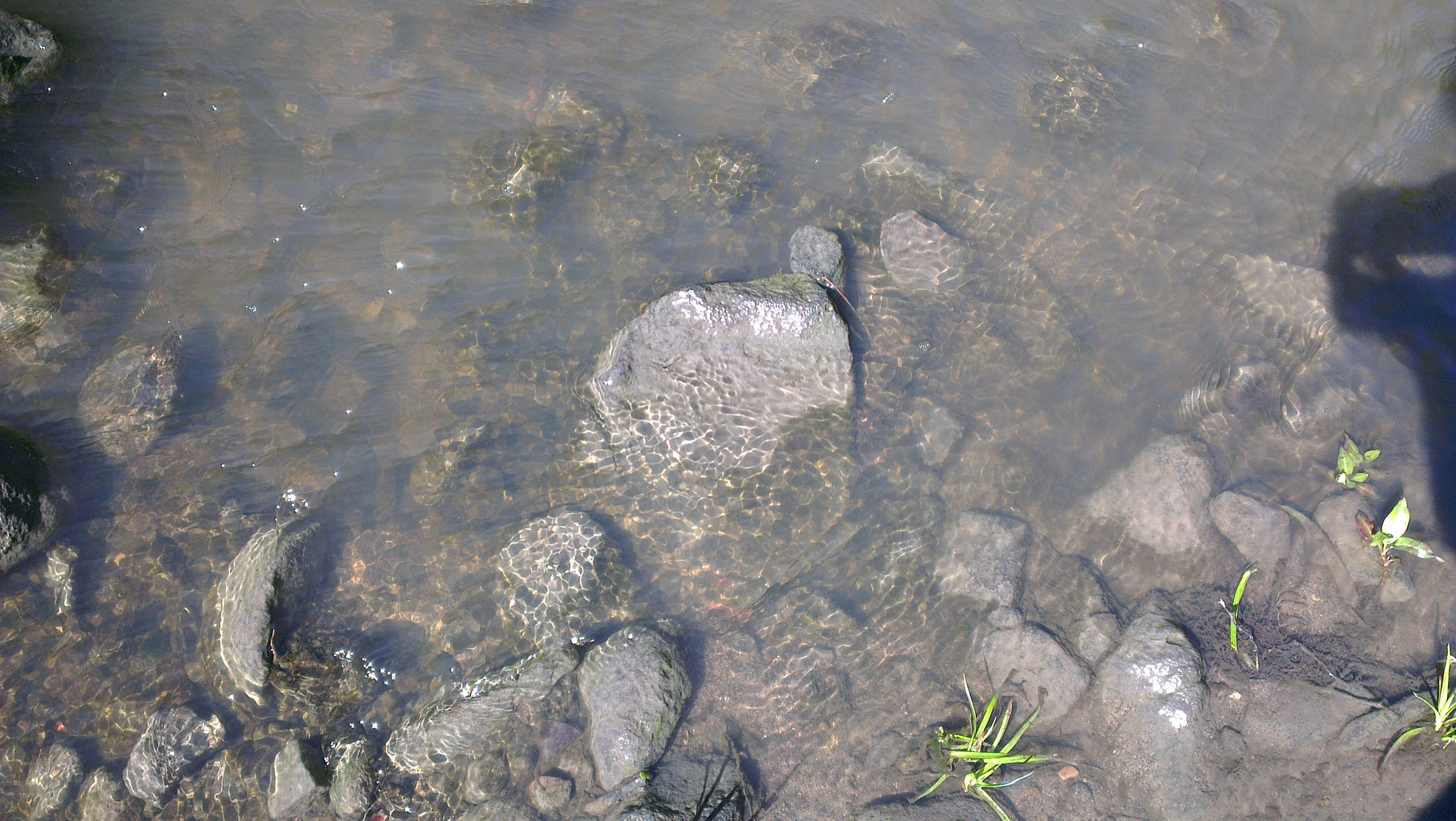
Water rippling in the sun, Merri Creek

I particularly enjoyed hearing about the different things people do every day to connect with nature. Tigrilla mentioned that at Damanhur (an ecospiritual community in Northern Italy) every household has a greeting tree. There is a custom of presenting oneself to this tree by placing your forehead against it before you go into the house. Another woman shared a similar ritual where she spends time with a tree in front of her own home in order to leave behind the stress, worry or irritation of the day before greeting her housemates.

Someone else shared Min Mia‘s concept of carrying your ‘poopy pack’ around and collecting ‘shit’ from people, if you don’t give your ‘poopy pack’ to a tree then you are likely to throw it at someone you love. This sparked an interesting conversation about whether giving our cares and worries to the trees is akin to composting them, some felt that it necessary to finish with gratitude to avoid viewing trees as some kind of energetic dumping ground.  Ideally we wouldn’t view our ‘negative’ emotions as waste but compost, an opportunity to learn and grow. I wonder if the act of giving those energies to a tree actually involves acknowledging and embracing the feeling paralleling mindfulness exercises like DROPS (don’t resist or push, soften). Trees, like all nonhuman nature, are wonderfully free of judgement.

It was wonderfully affirming, like when I discovered the tree project, to find that so many people share my arboreal affinities.

Big shout out to Joe and Mira and the Melbourne Evolver Network for putting the weekend together!
The calling

image

It has been a really difficult month but there have been some amazing highlights.  One of them was reading this poem at Mother Tongue. It has served as something of an affirmation or a mantra, these words remind me of who I want to be and who I already am. I offer them to you because the more I share these words, the more I strengthen my commitment to this vision and if I’m really lucky maybe you will find solace in them too.

I was called in the middle of dancing
In the pause between the first wave and the second
Between the inbreath and the outbreath

The voice of the earth pulled at my heart
I call you she said
Yes I answered, without hesitation
Take me, use me, let me serve You
An inward breath, a pause, a moment of clarity, of ecstasy

And then I crumbled
I am not enough! I am a poor instrument! I will Fuck it up! I’m lazy! I’m a terrible procrastinator!
I became small, shut down,
A woman reached out to offer comfort and I snarled, I almost bit her hand.

I was called but I don’t know what it means
These moments of insight seem so profound
But afterward the current of life pulls me onward like nothing has changed
Before enlightenment, get up, go to work, make dinner, do the bedtime routine.
After enlightenment, get up, go to work, make dinner, do the bedtime routine.

Is this all there is? Is this all I am?
Is my calling going to feed my family?
Is the Earth going to set me up with a sweet job?
Am I wrecking it by asking these questions?

I am a tree
I am rooted in the Earth
My limbs give shade, shelter and solace
Creatures call my ample boughs home
My generousity is limitless
Yet never diminishes me or those who receive my grace

Who would find fault in the beauty of these twisted branches?
Who would measure the performance of my striving shoots?
Who could doubt that I am enough?
Just as I am
Rooted in the Earth
Reaching for the sky

I am the voice of compassion
I am the voice of the earth
I am the voice of the universal life force
I transform the world by being me.

On grief

Grief came in the night and curled up on my chest
I woke to it staring me in the face
Placid, implaccable but somehow menacing.

As I stared into those yellow, unblinking eyes, it’s tail began to lash.
I grabbed it with firm hands,
Craning my neck to avoid a counter attack
And sat up, slowly, expecting it to drop to the floor
instead I felt its claws.

Pin pricks became angry red lines raking downward hot and heavy.
It clung, ripping, tearing but never letting go
Pulling great wracking sobs out of me
Dragging at my heart through my ribcage
Sinking it’s teeth into delicate flesh.

I thought I would die.

Body tense, teeth clenched, hands fisting away tears.
I stretched beyond breaking,
torn asunder but somehow inescapably still here.
Every part of me pinned by claw or tooth
Laid out, throbbing
A dissection of human suffering.
Helpless.

I gave up.
Stopped pushing, stopped fighting, stopped trying to be free.

I laid each hand across my heart and wept.

Of their own volition, my hands found soft fur
Drew my fingers in long, languid strokes.

The pain ebbed,
The cat
purred.

Grandmother gum

A friend recently drew my attention to the Radio National Project – Trees I’ve Loved. They asked listeners for stories about their relationships with trees and then selected 40 for production and broadcast. I highly recommend you go and listen, they are mostly only 2-5 minutes long and very moving.

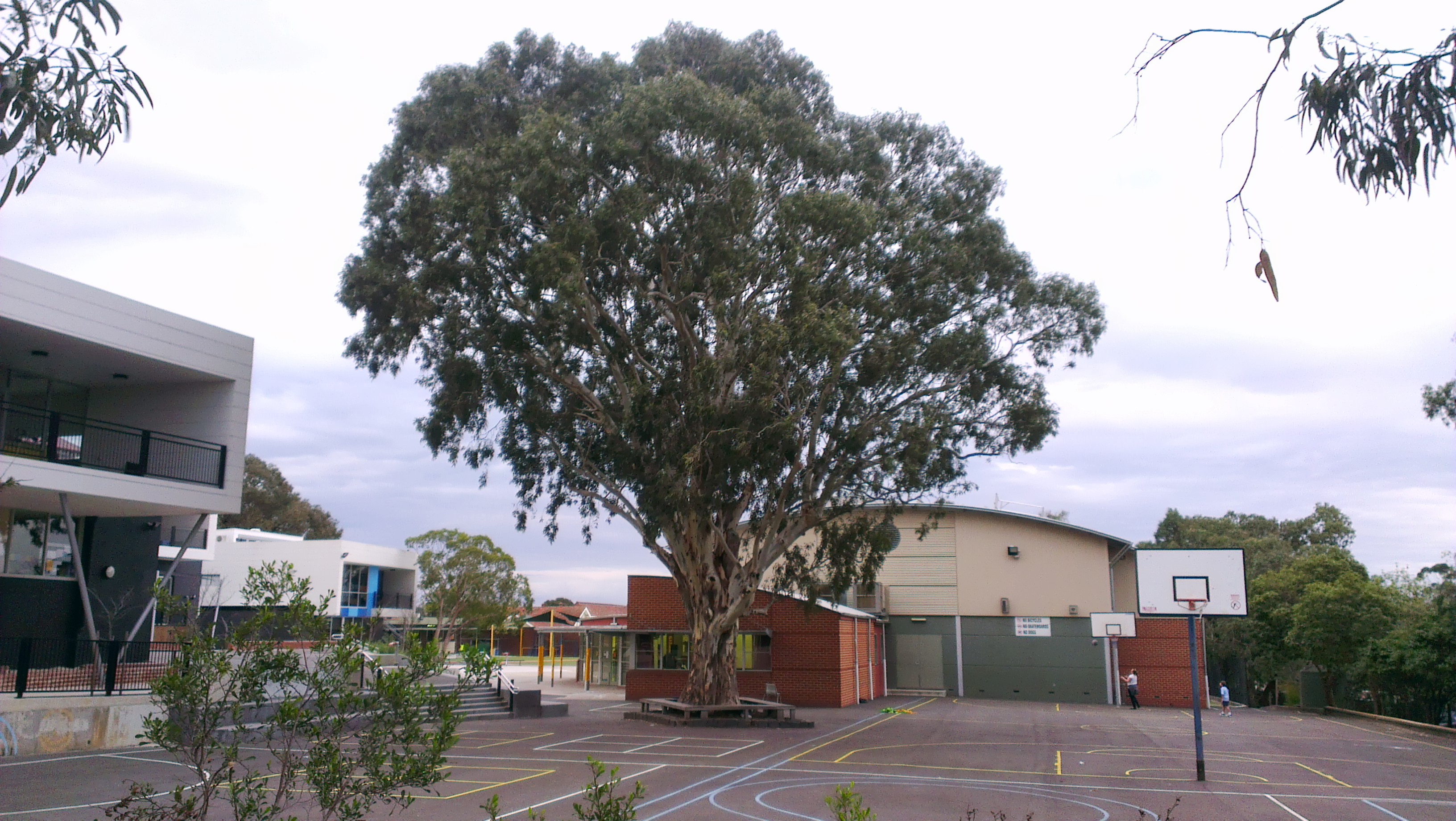
It has inspired me to reflect on my own relationship to trees and particularly Grandmother Gum, the great old gum tree in the grounds of the local primary school. I’ve spoken before about how trees function as a mindfulness bell for me but I find my relationship with this particular tree is deeper than that.

Grandmother Gum

I went to primary school here and the grounds are steeped in memories of humiliation. That’s the bench where I was picked last for rounders, there’s where my ‘friends’ used to enjoy running off on me at random moments (taking advantage of my inability to keep up), and over the back was the library where I took refuge. The buildings are all different now (thankfully) but the ground and my heart hold the memories.

I don’t remember taking refuge in the tree back then but now I feel she was a silent witness to that time in my life. Her boughs sheltered me from the sun as I stood in the outfield lost in my own thoughts, oblivious to the game I was excluded from. It comforts me to know that if my son goes to school here, she will watch over him as she has watched over me.

I have introduced Mr A to the tree and encouraged him to speak with her. The idea has taken root, he refers to her as the Grandmother Tree, and also “your friend, Mama.” Yesterday we went to visit her but the gates were locked. Mr A said “she misses us” and then “I wish there were more Grandmother Trees, out here.” I sighed “Yeah, me too.”

I weep now as I write that, for the kind of world where Grandmother Trees are everywhere and duly respected. The kind of world where trees are actually allowed to grow that old. I am stunned by three and a half year old Mr A’s easy respect for this great being. It comes so naturally to him and yet so many people seem to miss the point, what happened?

I fear for the future of this precious tree. A family friend in the next street once said it’s a Corroboree Tree (a tree that predates colonisation where people would have gathered). I’ve looked for scars and found none so it can’t be verified. I find myself wanting to contact the Koorie Heritage Trust, to ask someone to come out and assess it. I want her to be protected. I also want other people to recognise that she’s special, perhaps to validate the depth of my own feeling. I feel lonely in my love for her, a weird hippie.

On the other side of the school there’s a mosaic that features local landmarks like the train-line and the creek. Along the top, holding it all in its generous embrace are the boughs of the Grandmother Gum. So perhaps I am not alone, other people honour her too. The school grounds are radically different than the days of my childhood but she is untouched.

The Radio National tree project is further evidence of the fact that people care about trees, find solace and joy in them, feel deeply for and about them, and grieve their loss. I wish this were more a part of our culture, that there were more places and spaces to speak of our connections, that trees were more deeply appreciated.

Craft is cool

I’ve been on a craft spree over the last month or so. I’ve made a journal, a dress and some wall art. I lost my phone for three days (which was unnerving and liberating) and was inspired to do a bit of crochet on the train. It has made me think about the value of working with my hands.

girl holds origami butterflies on strings

I once taught someone to crochet and jokingly said “It’s good to have a practical skill come the environmental apocalypse.” Of course I don’t know if that’s where we are headed but it certainly seems like things need to change, (this post articulates it beautifully). One of the things that would have to change is the value of manual labour.

I find it strange sometimes that sitting at a desk pushing paper is valued so much more highly than my ability to create books or clothes. To the point where it’s just not worth trying to sell the fruits of my labour even though I love it. Our economy values the thoughts in my head much more highly than the skills in my hands.

Handbound coptic stitch journal with postcard covers

I admit I find the thought of a reevaluation of this hierarchy … delicious. ‘Craft’ is overlayed with political and cultural connotations that become particularly apparent when one considers its distinction from ‘art‘. According to one scholar “what white European men make is dignified by the label “art”, while what everyone else makes counts only as craft.” I hope for a more socially just world as well as an Earth-caring one and this seems to be one of places where those passions combine.

The art of meaningful conversation

Recently I’ve been making connections between a variety of different ideas but haven’t known how to articulate them. There is something about the human need for meaning, belonging and importance that connects to our environmental crisis.

On the one hand I’ve been reading Eckhart Tolle and Brene Brown. I’ve found enormous personal insight in their work and it has helped me to push myself toward being a better and happier person. In the face of environmental crisis it might seem like this personal journey is self-indulgent but it’s not.

Consumption is driven by numbing behaviour, when we take the time to say “I am enough, I have enough, I am grateful” and do the work to believe it and feel it. Then we are freed from the need to consume mindlessly. That’s not even the half of it though, we have gifts to offer the world that we squander in our mindlessness. We are not fulfilling our potential as a species because our greatest creative gifts are burried beneath a flood of stuff.

The pursuit of money over meaning is killing us.

A mind map of the environmental crisis

This week I attended three days of training on the Art of Hosting. On one level what we learned was a collection of tools and group processes for engaging people in generating creative solutions to social problems. What the hosts modeled though were ways to keep people present and engage in meaningful conversation. They drew the group to recognise our common humanity, to step out from behind our professional identities, engage with what matters to us and apply it to our work.

Meaningful conversation is fundamental to society’s transition from destruction to sustainability. When we make peace with the present moment we stop trying to impose our will on the world and come to appreciate what is given and what we have to give. As we realise our fundamental worth we stop needing to prove it with bigger, better, faster, more and we naturally make space for others to be present and call forth their better/higher/buddha nature. This creates the grounds for genuine dialogue, it’s the only way that change can happen and the only way we can come up with the kind of creative and innovative solutions we need.